

If you’ve ever stood by your gate because that’s the only spot where your network works, you’re not alone, maybe you’ve held your phone in the air trying to send an urgent WhatsApp message. Maybe you’ve had to restart your mobile data three times before your banking app could load. Or perhaps you’ve been on an important call when the other person suddenly says, “Hello? I can’t hear you again.”
Network frustration has become one of those everyday Nigerian experiences that almost everyone can relate to, but behind those moments of dropped calls and endlessly buffering videos, something important is happening.
Nigeria’s telecom operators have now completed more than 5,000 of the planned 12,000 network coverage and capacity sites scheduled for deployment across the country. According to the Nigerian Communications Commission (NCC), this represents approximately 41.7 percent progress in one of the country’s biggest telecommunications infrastructure expansion projects in recent years.
The numbers may sound technical, but they tell a bigger story about where Nigeria is heading, because every new telecom site means one thing: more people and businesses are gradually being connected to opportunities that increasingly exist online.
There was a time when a poor network simply meant you couldn’t make a call, today, poor connectivity can disrupt an entire day, a university student may miss an online lecture because a video keeps freezing, a small business owner may lose a sale because a transfer cannot go through, a remote worker may struggle to join an interview or attend a virtual meeting, a ride-hailing driver may be unable to receive bookings because mobile data suddenly disappears, the internet has become deeply woven into everyday life in Nigeria, our phones are no longer just communication devices, they are banks, classrooms, marketplaces, entertainment centres, offices, and business tools, this is exactly why expanding telecom infrastructure has become so important, as more Nigerians rely on digital services, networks need greater capacity to handle growing demand.
Don't MIss This Article

The Infrastructure Most People Never See
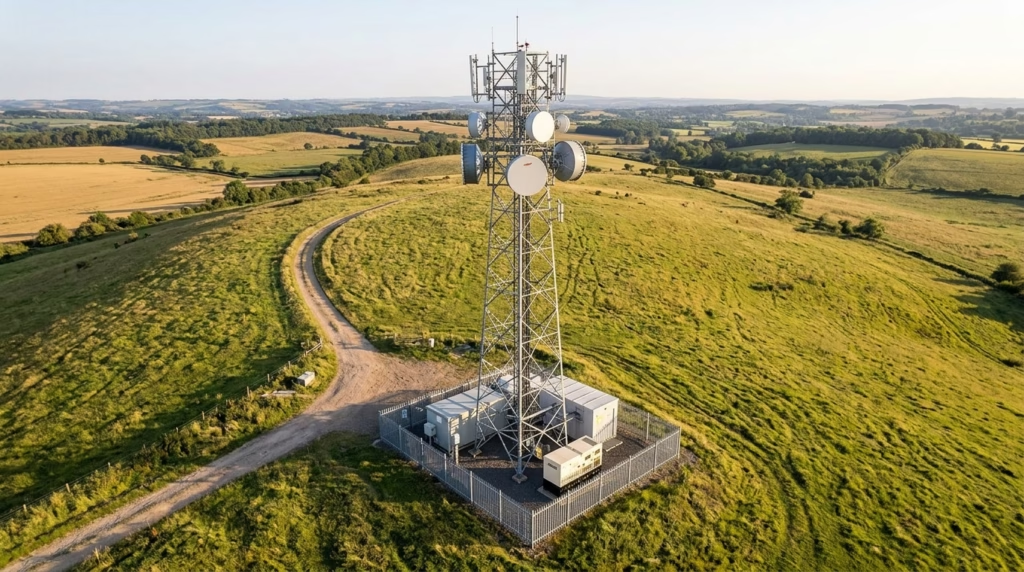
Telecommunications infrastructure is one of those things that works quietly in the background, most people don’t think about network towers while streaming a movie, they don’t think about fibre links while sending money, they don’t think about Base Transceiver Stations until their internet stops working, yet these invisible systems power much of modern Nigeria.
According to information released by the NCC, operators have also extended fibre connectivity to more than 700 sites and completed upgrades on over 2,000 Base Transceiver Stations (BTS) across the country.
Behind these figures are thousands of engineers, technicians, field workers, and support teams working in cities and remote communities to improve network performance and increase capacity.
Don't MIss This Article

The work is often demanding, equipment must be transported across difficult terrain. Sites need power and maintenance. Infrastructure requires security and continuous upgrades, it is a long process that most people never see, even though they benefit from it every day.
Why This Matters Beyond Major Cities
When people talk about Nigeria’s technology ecosystem, conversations often centre around Lagos, sometimes Abuja, occasionally Port Harcourt, but reliable internet access should not be determined by where someone lives, a student in Katsina deserves access to educational resources online just as much as someone in Ikeja, a farmer in Benue should be able to receive market information on a smartphone without struggling with poor connectivity, a tailor in Osun should be able to receive digital payments without repeatedly apologising to customers because the network is down.
Connectivity is no longer a luxury, increasingly, it determines who can fully participate in the digital economy, expanding network infrastructure is therefore not just about technology, it is also about inclusion.
Building the Foundation of Nigeria’s Digital Economy
Nigeria’s digital economy ambitions depend heavily on one thing: connectivity, fintech application relies on stable networks, cloud service depends on internet infrastructure, e e-commerce platform needs reliable connectivity, digital government service requires citizens to be able to access the internet consistently.
The telecommunications sector has evolved into one of the country’s most important economic foundations, ts impact stretches far beyond calls and text messages, telecom infrastructure now supports banking, education, healthcare, entertainment, logistics, and commerce, in many ways, it has become one of the invisible engines driving Nigeria’s digital transformation.
Preparing for Tomorrow’s Technologies
The networks Nigerians use today are carrying much heavier demands than they did even a few years ago, data consumption continues to rise as more people stream videos, use mobile applications, make digital payments, and work online, emerging technologies are expected to place even greater demands on network infrastructure, artificial Intelligence applications are becoming more common.

Cloud computing adoption is increasing, internet of Things solutions are gradually entering businesses and industries, digital services continue to expand across nearly every sector of the economy, these developments require networks that are faster, stronger, and more resilient, that is why the deployment of new sites and infrastructure upgrades matters, the investments being made today are helping prepare the country for tomorrow’s digital needs.
The Challenges Are Still Real
Of course, no one should assume that the completion of more than 5,000 sites means network problems will disappear overnight, many Nigerians still experience slow internet speeds, dropped calls, and inconsistent service quality, telecommunications operators also face significant challenges.
Maintaining infrastructure remains expensive. Energy costs continue to rise. Site security remains a concern in some areas, and expanding infrastructure across a country of more than 200 million people is a complex undertaking, there is still considerable work ahead, but progress is happening, and in infrastructure development, progress often happens gradually before people begin to notice its full impact.
Why This Story Matters to Ordinary Nigerians
Ask any Nigerian about network issues, and chances are you’ll get a story immediately, maybe it was the transfer that refused to go through during an emergency, maybe it was an online interview interrupted by poor connectivity, maybe it was a customer who left because a POS transaction kept failing, maybe it was the football match that buffered just before the winning goal, poor connectivity is no longer merely an inconvenience, it affects how people learn, work, earn money, and stay connected with the world, this is why every new telecom site matters, somewhere in Nigeria, a newly upgraded network may help a business process payments more smoothly, somewhere else, a student may finally attend virtual classes without interruptions, another community may experience stronger internet access for the first time, that is the human side of infrastructure, it quietly changes possibilities.
Two decades ago, mobile phones were still considered a luxury by many Nigerians, today, smartphones have become essential tools for everyday life, the country’s future will increasingly depend on the quality of the networks supporting those devices, the completion of more than 5,000 telecom sites and the achievement of approximately 41.7 percent of the planned 12,000-site rollout represent meaningful progress toward building a more connected Nigeria, the work is far from finished, there will still be moments when calls drop and videos buffer.
But every new site, every fibre connection, and every infrastructure upgrade brings Nigeria one step closer to a future where reliable connectivity is not a privilege for a few people in major cities, but an everyday reality for millions across the country, and for a nation that is becoming more digital by the day, that future matters more than ever.