

Farmers who plant trees and protect the land could soon get paid for it. Nigeria has just taken its first technical steps toward making that happen.
The Agro-Climatic Resilience in Semi-Arid Landscapes project, known as ACReSAL, has started technical reviews to build the digital system behind a new Payments for Ecosystem Services pilot. This is Nigeria’s first attempt at this kind of programme, and it could open the door to climate finance and carbon market money for the country.
The idea is simple. Landowners and farmers who use sustainable land practices, like planting trees or restoring degraded soil, can be rewarded for the environmental good they create. To make this work fairly, the system needs solid proof that the environmental benefits are real.
That is where the digital part comes in. The project will use geospatial technology, satellite mapping, and greenhouse gas accounting tools to measure and verify these environmental outcomes before anyone gets paid. This pilot falls under a section of ACReSAL focused on building stronger institutions and policy. The goal is to create a system that rewards good land use with real, measurable results behind it.
Why Adamawa State Was Chosen
Don't MIss This Article

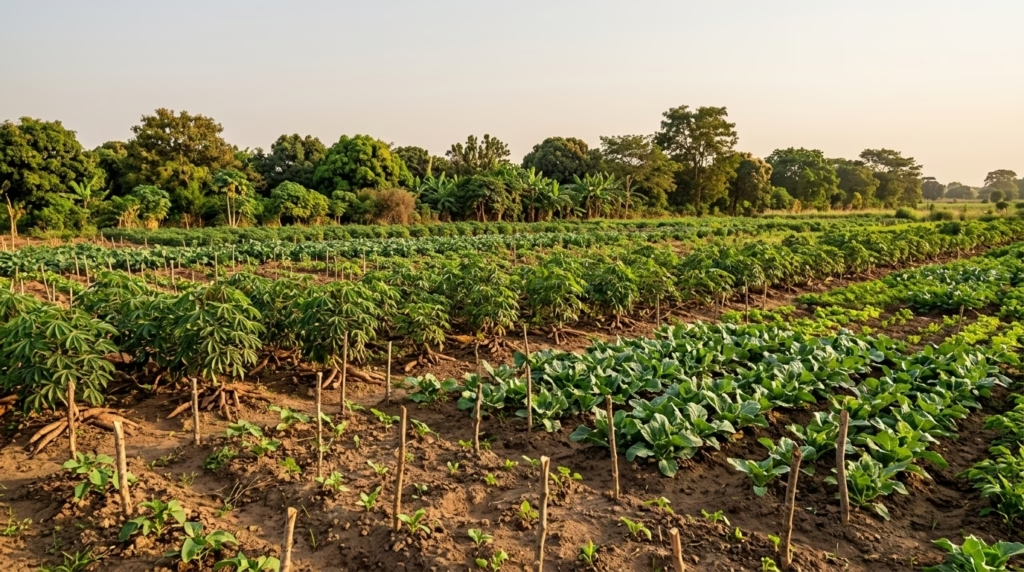
The pilot is expected to be tested first in Adamawa State, and the state already has a strong head start. More than one million agroforestry seedlings have been given out to over 300 households there. Regenerative farming methods have also been set up across 3,131 hectares of land in the state.
These numbers show why Adamawa makes sense as a testing ground. The groundwork for tree planting and better farming is already in place, so adding a payment system on top of it is the next logical step.
Building the Digital Backbone
Don't MIss This Article

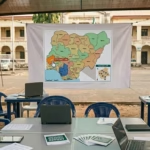
At a technical meeting in Abuja, experts and consultants gathered to design what is called a Measurement, Reporting and Verification system, or MRV for short. This system is the backbone of any serious carbon finance or ecosystem payment programme anywhere in the world.
Without strong MRV, nobody can trust that the environmental claims being made are true. The Abuja meeting focused on getting this part right before any money changes hands.
Abdulhamid Unar, the National Project Coordinator for ACReSAL, said the team is laying the administrative and technical groundwork for a major shift in how landscape conservation is sustained. He said the inception meeting was about closely studying the proposed design and coordination plans, since getting the framework right now is what will make the pilot succeed once it moves to the ground.
How Nigeria Could Get Paid for This
The project is also exploring different ways to bring in money once the system is verified and working. Discussions during the Abuja meeting touched on green bonds, voluntary carbon markets, and mechanisms tied to Article 6 of the Paris Agreement.
Officials from the Food and Agriculture Organization Investment Centre also joined talks with the ACReSAL team to look at how to set up the investment side of the programme properly.

The Bigger Picture Behind ACReSAL
ACReSAL is not new. The World Bank-backed programme launched in 2022 and works across 19 northern states plus the Federal Capital Territory. Its main job is fighting land degradation and helping communities adapt to a changing climate.
The project runs on a $700 million financing package from the World Bank. So far, ACReSAL says it has restored more than 800,000 hectares of degraded land through tree planting, agroforestry, and gully repair work.
The bigger target is even more ambitious. ACReSAL is aiming to restore one million hectares of land by 2028, which is part of Nigeria’s wider promise to restore four million hectares by 2030.
What Happens Next
The Abuja meeting wrapped up with an agreement on who does what between consultants, the project’s management team, and state-level officials. Their feedback will now be used to sharpen the implementation plan, manage risks better, and map out the road to actually launching the pilot.
This is still early-stage technical work, not a finished payment system Nigerian farmers can tap into today. But if it works as planned, it could give farmers in the north a new way to earn from the land they are already working to protect. For a region facing real climate pressure, that would be a welcome shift from talk to actual reward.