

The latest wave of xenophobic violence in South Africa has pushed tensions between the two countries to a boiling point, with Nigerian senators calling for economic action that could shake up the telecom and pay-TV industry in Africa’s most populous country.
Between April and June 2026, waves of violent anti-immigrant attacks swept through major South African cities, including Johannesburg, Pretoria, Durban, and Mossel Bay. Organized groups like Operation Dudula led demonstrations demanding the removal of foreign nationals, with Nigerians among the primary targets.
At least two Nigerian men died during the April violence. One of them, Amaramiro Emmanuel, was beaten by officers of the South African National Defence Force on April 20. The other, Ekpenyong Andrew, was arrested in Pretoria and later found dead in a mortuary.
Nigeria’s diaspora agency, NIDCOM, confirmed that Nigerian children were afraid to attend school, while business owners were scared to open their shops due to targeted attacks, looting, and harassment.
Nigeria’s Response: Beyond Diplomacy
Don't MIss This Article

The Nigerian government summoned South Africa’s acting high commissioner and began arranging voluntary evacuations. Foreign Affairs Minister Bianca Odumegwu-Ojukwu confirmed she spoke directly with South Africa’s Minister of International Relations, Ronald Lamola, insisting that Nigeria could not ignore the continued harassment and alleged extrajudicial killings of its citizens.
But for some lawmakers, phone calls are not enough.
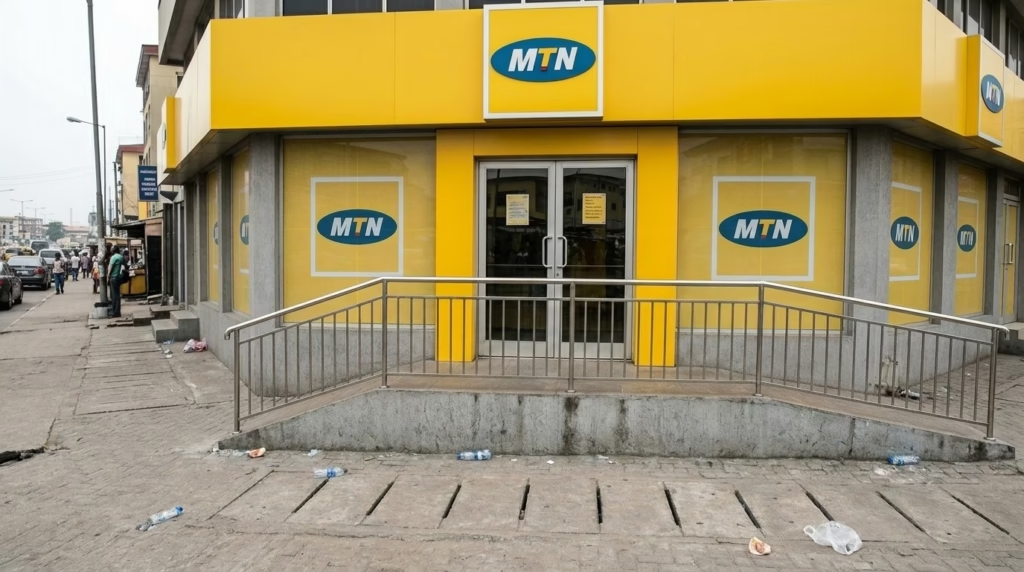
Senator Adams Oshiomhole, representing Edo North, used the Senate floor to call for the revocation of operating licences of South African companies in Nigeria, specifically naming MTN and MultiChoice, the owners of DStv.
Don't MIss This Article

Oshiomhole proposed that Nigeria should nationalise MTN and withdraw its licence, arguing that the telecom giant repatriates substantial revenue out of Nigeria while Nigerians face hostility on South African streets. He extended the same recommendation to MultiChoice, accusing the company of exploitative practices.
He did not mince words on the Senate floor. “If you hit me, I’ll hit you. I think it is appropriate in diplomacy. It’s an economic struggle,” he said.
Why MTN and DStv Are in the Crosshairs
The targets are not random. MTN and MultiChoice are two of the most visible South African brands operating in Nigeria, with millions of subscribers between them.
Nigeria and Ghana together accounted for roughly 90 percent of MTN’s total profit after tax in 2025, while MTN South Africa grew by just 2 percent that same year. That figure makes Nigeria’s market not just important to MTN, but essential to the company’s survival as a profitable business.
News of Oshiomhole’s proposals triggered anxiety in the financial sector, with shares of MTN Nigeria on the Nigerian Exchange falling sharply as investors weighed the possibility of state intervention.
Oshiomhole was not alone. Senator Victor Umeh described the situation as alarming, saying Nigerians in South Africa were hiding for their lives and could not move freely. Senator Abdul Ningi warned that Nigeria had “options” if attacks continued. Senate President Godswill Akpabio called the violence “barbaric” and “unacceptable,” and announced that the National Assembly would send a joint delegation to engage with South Africa’s parliament.
Not everyone agrees that targeting MTN and DStv is the right move. Economists warned that retaliatory action could damage bilateral ties, weaken investor confidence, and undermine African economic integration. They pointed out that MTN, MultiChoice, and Stanbic IBTC have created thousands of jobs in Nigeria and contributed to financial inclusion. Disrupting those businesses, they argued, would hurt Nigerian workers, suppliers, and consumers more than it would hurt South Africa.
Nigeria’s foreign affairs minister herself warned that the violent actions of anti-foreigner groups like Operation Dudula could “jeopardise the safety of South African interests in Nigeria,” stopping short of endorsing direct government action against those businesses.
The Nigerian government has not yet moved to revoke any licences. For now, the loudest voices for economic retaliation are coming from the legislature, not the presidency. President Bola Tinubu has condemned the attacks, describing them as “xenophobic rhetoric, hate speeches and incendiary anti-migrant statements,” but the presidency remains focused on the voluntary repatriation of Nigerians who want to return home.
The gap between what senators are demanding and what the executive is doing remains wide. But with Nigerians dying, businesses shutting down, and a financial giant like MTN watching its share price drop over the news, the pressure to act is only going to grow.
If you are a Nigerian MTN subscriber or a DStv customer, nothing changes today. But if the government moves beyond words, the companies most Nigerians use daily could be at the centre of a diplomatic and economic confrontation unlike anything this region has seen in years. Watch this space.