

If you walk into any phone accessories shop in Computer Village or Slot, and the first thing they’ll ask after you buy a phone is, “Do you need a screen guard?” It’s become so automatic that most of us don’t even question it. We just say yes and pay the extra money.
But here’s a question worth asking: Is that screen guard actually protecting your phone, or are you just throwing money away while potentially making your phone experience worse?
I’ve used screen guards on every phone I’ve owned for years. Then I started noticing things that didn’t quite add up. My screen guard would crack, but my actual screen underneath was perfectly fine. My touch wasn’t as responsive as it used to be. And I kept replacing these guards every few months, spending money repeatedly.
So I did something bold. I removed my screen guard completely and started using my phone naked for six months. What I discovered completely changed how I think about phone protection.
Modern Phone Screens Are Already Incredibly Strong
Let’s start with the most important fact that phone sellers rarely mention. Your phone screen is not the fragile piece of glass it was ten years ago.
Don't MIss This Article

Most modern smartphones use Gorilla Glass Victus or similar technology. These screens are designed and tested to handle drops, scratches, and daily wear. Companies like Corning spend millions developing glass that can survive real world conditions.
Your iPhone or Samsung flagship has a screen that costs thousands of naira to manufacture. Do you really think Apple or Samsung would put weak glass on a phone they’re selling for hundreds of thousands? They test these screens by dropping steel balls on them, scratching them with sharp objects, and bending them under pressure.
The screen on your current phone is probably tougher than you think. That cheap screen guard you bought for 500 or 1000 naira isn’t adding meaningful protection. In fact, it might be creating problems.
Don't MIss This Article

Screen Guards Actually Reduce Touch Sensitivity
This is something I noticed immediately after removing my screen guard. My phone felt more responsive. Swiping was smoother. Typing was more accurate. Gaming felt better.
Here’s why this happens. Every layer you add between your finger and the actual screen reduces sensitivity. Your phone’s touch technology is calibrated for direct contact with the screen surface. When you add a screen guard, especially a thick one, you’re creating a barrier.
You might not notice it at first because you get used to it. But try using a phone without a screen guard after using one with a guard for months. The difference is clear. Actions that required a firm press now work with a light touch. Swipes that sometimes failed now register perfectly.
For people who use their phones heavily, like content creators, mobile gamers, or anyone who types a lot, this reduced sensitivity is a real problem. You’re making your expensive smartphone work less efficiently than it was designed to.
They Make Your Screen Look Worse
Phone manufacturers spend enormous resources making screens that look beautiful. Bright colors, deep blacks, sharp text. Then we cover them with a piece of plastic or cheap glass that reduces the visual quality.
Most screen guards, especially the affordable ones we buy in Nigeria, affect screen clarity. Colors don’t look as vibrant. Text isn’t as sharp. If you watch videos or look at photos on your phone, you’re not seeing them the way they were meant to be seen.
Don't MIss This Article
Some screen guards also create that rainbow effect or show fingerprints more obviously than the actual screen would. You end up with a viewing experience that’s worse than what you paid for.
I remember watching a YouTube video on my phone after removing my screen guard and thinking, “Wait, has the screen quality improved?” It hadn’t. I was just finally seeing what my phone screen actually looked like without a barrier.
The Bubble and Dust Problem
How many times have you applied a screen guard only to find bubbles you can’t get rid of? Or dust particles trapped underneath that drive you crazy every time you look at your screen?
Even when professionally applied, screen guards rarely sit perfectly flat. Over time, edges can start lifting. Dust might get in. The adhesive weakens. You could even end up with something that looks messy and feels cheap on your expensive phone.
I’ve lost count of how many times I’ve replaced screen guards not because they were damaged, but because they just looked bad. Bubbles at the edges, dust underneath, or the adhesive turning yellow. That’s money down the drain for an aesthetic problem the screen guard itself created.
They Don’t Actually Prevent Screen Cracks
One of the biggest myth about screen guards is that people believe they prevent screens from cracking when you drop your phone. This is not really true.
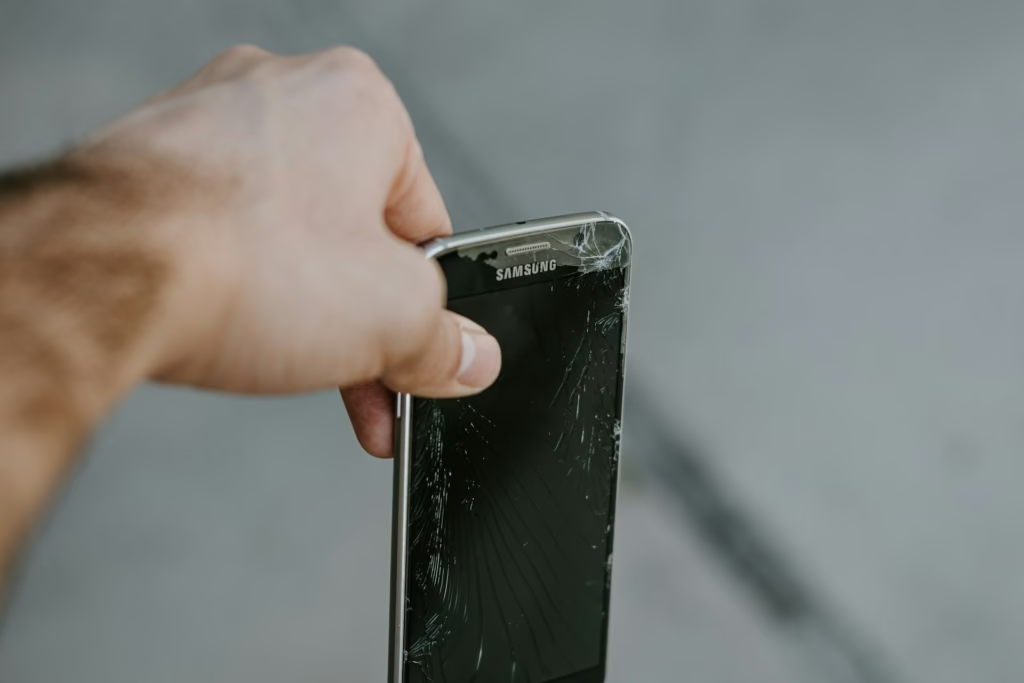
When you drop your phone and the screen cracks, it’s because of impact force, not surface scratches. A thin piece of plastic or tempered glass on top of your screen doesn’t absorb significant impact. The force still transfers to your actual screen underneath.
What actually protects your phone from drop damage is a good phone case with raised edges. When your phone lands face down, a proper case prevents the screen from making direct contact with the ground. That’s the real protection.
I’ve seen people drop phones with screen guards and the guard cracks. They celebrate, thinking the guard saved their screen. But the thing is, if the guard cracked from that fall, there’s a good chance your actual screen would have survived that same fall anyway because of how strong modern phone screens are.
The screen guard cracking just gives you a false sense of security while you spend money replacing it.
Screen Guards Are a Recurring Expense
Let’s talk about money. A decent screen guard costs between 1,000 to 5,000 naira depending on quality and where you buy it. Some people replace them every few months when they get scratched or start looking bad.
Over the life of your phone, say two to three years, you might spend 10,000 to 20,000 naira or more on screen guards. That’s real money that could go toward other things.
Meanwhile, your actual phone screen, if you’re reasonably careful, will likely survive just fine without any guards. Modern screens are scratch resistant against normal daily items like keys and coins in your pocket.
The screen guard industry thrives on fear. They want you to believe your screen is fragile and needs constant protection. But the truth is, you’re spending money on repeated purchases of something you probably don’t need.
When Screen Guards Actually Make Sense
Now, I’m not saying screen guards are completely useless for everyone. There are specific situations where they make sense.
If you work in construction or do manual labor where your phone is exposed to sand, metal shavings, or other abrasive materials, a screen guard provides an extra layer that’s easier to replace than your actual screen.
If you plan to resell your phone and want it in pristine condition, a screen guard keeps the original screen perfect. Though honestly, most buyers care more about the phone working well than tiny scratches you can barely see.
If you have kids who use your phone and tend to be rough with it, a screen guard might give you peace of mind. Though again, a good case is more important.
But for most people using phones in normal daily conditions, going to work, school, hanging out with friends, the screen guard is unnecessary protection that creates more problems than it solves.
What You Should Do Instead
If you’re going to ditch the screen guard, here’s what actually protects your phone better.
Invest in a quality phone case with raised edges. This is non negotiable. When your phone falls face down, raised edges prevent the screen from hitting the ground. This is far more effective than any screen guard.
Be mindful of where you put your phone. Don’t toss it in bags with sharp objects. Don’t put it face down on rough surfaces. Basic care goes a long way.
Clean your screen regularly with a microfiber cloth. Without a screen guard collecting smudges, your actual screen stays cleaner longer and looks better.
Consider phone insurance if you’re really worried about damage. Some banks offer this with their accounts, or you can get it separately. This protects against actual damage, not just surface scratches.
My Personal Experience Going Without
It’s been more than six months since I removed my screen guard, and my phone screen is perfectly fine. No major scratches, no cracks, nothing that affects my daily use.
The phone feels better in my hands. The screen looks more beautiful. Touch response is noticeably better. And I’ve saved money by not buying replacement screen guards.
Yes, if I look very closely in bright light, I can see some tiny micro scratches. But they’re only visible when I’m specifically looking for them. During normal use, I never notice them. They don’t affect the screen clarity or my ability to see content.
Compare that to the screen guards I used to have, which would develop obvious scratches, bubbles, and edge lifting that I saw every single day.
The Point is
Modern phone screens are engineered to be tough. They can handle normal daily use without additional protection. Screen guards often reduce your phone’s performance and visual quality while costing you money repeatedly.
A good case with raised edges protects your phone far better than a screen guard ever will. Combined with reasonable care, your phone will be fine.
The screen guard industry wants you to believe you need their product. But the evidence suggests otherwise. Your phone’s actual screen is probably tougher than the guards you’re putting on it.
So ask yourself honestly, is your screen guard actually protecting your phone, or is it just wasting your money while making your phone experience worse?
You might be surprised by the answer when you really think about it.