

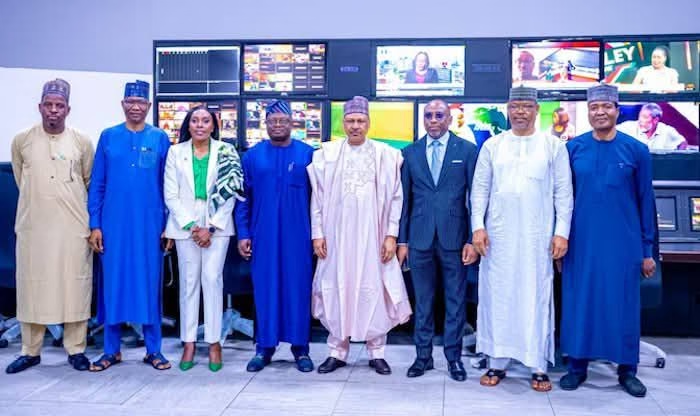
Nigeria has officially launched FreeTV, a new national digital broadcasting platform offering more than 100 free television channels without monthly subscription fees, in a major push to expand access to digital content across the country.
The rollout is part of Nigeria’s long-running Digital Switch-Over (DSO) programme aimed at moving the country from analogue TV systems to fully digital broadcasting, while also improving access, picture quality, and channel variety for households.
FreeTV launches as Nigeria pushes digital TV transition
FreeTV was launched as a government-backed free-to-air platform designed to deliver television content through satellite, terrestrial systems, and mobile access. The service brings together over 100 channels across news, entertainment, sports, education, children’s programming, and indigenous language content.
According to official updates, the platform is part of Nigeria’s plan to modernize broadcasting infrastructure and complete its digital transition, which has faced delays for several years. The renewed rollout now targets wider national coverage, including rural and underserved areas.
Over 100 channels already signed on
Industry regulators say more than 100 television stations have signed up to broadcast on FreeTV, with a significant number already active on the platform.
Don't MIss This Article

Reports show that at least 50 plus channels are already live, with more being added as the platform expands. The channel lineup includes general entertainment stations, news networks, kids’ channels, music, movies, and talk shows.
This wide mix is designed to make FreeTV a single access point for different types of viewers, replacing the need for multiple paid subscriptions.
How Nigerians can access FreeTV
FreeTV can be accessed through compatible set top boxes that support DVB T2 or DVB S2 standards, depending on the transmission method available in each area. The platform also supports satellite and internet based delivery, making it more flexible than traditional terrestrial TV.
Don't MIss This Article

A mobile application is also part of the rollout, allowing users to stream selected channels directly on smartphones, although full access may depend on network coverage and data availability.
Officials have also emphasized that households with compatible free to air decoders may not need to buy new equipment.
What the launch means for Nigerian viewers
The biggest impact of FreeTV is the removal of monthly subscription fees, which could reduce the cost of watching television for millions of households.
It also strengthens local broadcasting by giving Nigerian content producers, regional stations, and language based channels a wider national audience. Channels in Hausa, Yoruba, Igbo, and other local languages are included in the lineup, reflecting a push toward more localized content distribution.
The government says the platform is also expected to create jobs in production, broadcasting, and technical services as more channels and studios join the system.
A big shift in Nigeria’s TV industry
FreeTV represents one of the biggest structural changes in Nigeria’s television industry in years, especially as pay TV services have dominated the market for over a decade.
Don't MIss This Article

While the platform is still expanding, its success will depend on infrastructure rollout, decoder affordability, and consistent signal quality across different regions.
A new chapter for digital broadcasting
With FreeTV now live, Nigeria is moving closer to completing its long delayed digital television migration, positioning free to air digital broadcasting as a mainstream alternative to subscription based TV services.
The next phase will focus on expanding coverage, improving reception quality, and increasing the number of active channels nationwide, as the country builds toward a fully digital broadcasting ecosystem.