

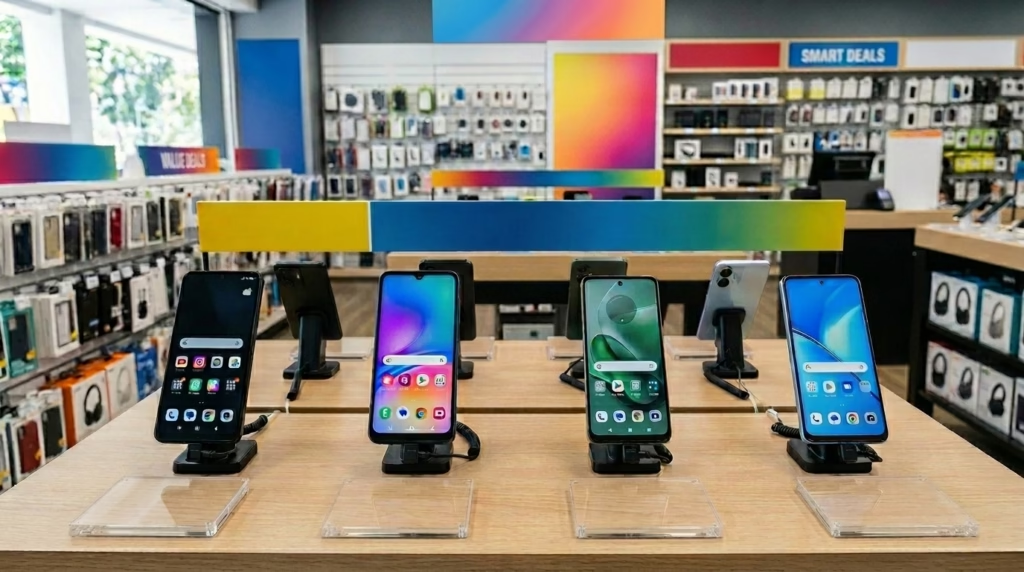
Six of Africa’s largest telecommunications operators have selected Nigeria as a pilot market for a new wave of 4G smartphones priced at just $40. This price translates to roughly N56,000 based on current exchange rates. The project is led by the Global System for Mobile Communications Association (GSMA) and a group of operators known as the G6.
The main goal is to bring millions of unconnected people online by making mobile devices truly affordable.
The G6 coalition includes major networks like MTN, Airtel, Orange, Vodacom, Axian Telecom, and Ethio Telecom. These companies serve about 800 million users across the continent. They noticed a major problem called the usage gap. This means mobile internet networks cover most parts of Africa, but a massive portion of the population cannot afford the smartphones needed to use the internet.
Nigeria was chosen for this test because the country has high network penetration but low disposable incomes.
Many citizens are dealing with inflation and currency pressures. Other countries in the 2026 pilot program include the Democratic Republic of Congo, Ethiopia, Rwanda, Tanzania, and Uganda.
Don't MIss This Article


GSMA data shows that entry-level devices in Sub-Saharan Africa can cost up to 26 percent of a person’s monthly income. This makes smartphone ownership impossible for many rural and low-income citizens.
To make the $40 phone a reality, the coalition has partnered with 18 device manufacturers. The agreement ensures that the new cheap phones will still have decent battery life, acceptable screen sizes, and enough storage capacity. The creators understand that if the phones are too slow or have bad batteries, people will not use them.
However, achieving this low price point is not completely up to the tech companies. Rising manufacturing costs and memory chip shortages are causing production problems. Because of this, the coalition is urging the Nigerian government to remove taxes and import duties on entry-level 4G smartphones. This tax relief is critical to keeping the retail price near the N56,000 target.
Don't MIss This Article

For the average Nigerian, this project could open up new daily opportunities. Millions of people who currently rely on basic push-button phones could soon access mobile banking, online education, e-commerce, and healthcare apps. Access to the digital economy is expected to help small businesses grow and connect more communities to modern services.
Bridging The True Connectivity Divide
Selling a $40 smartphone is a massive step forward, but the success of the project relies heavily on network quality.
If millions of new users jump on the internet at once, the telecommunications networks must be strong enough to handle the extra traffic.
A cheap phone is only useful if it can load web pages and apps without endless buffering.
If the government helps reduce taxes and the network providers improve their data speeds, this $40 experiment could bring millions of Nigerians fully into the digital age.